

Comparison and Introduction between Cold Heading and Hot Heading Nuts for Fasteners
- 2025-07-27
- 31
- Fujian Demao Fastener Co.,Ltd
Cold heading is the use of the plasticity of metals to apply pressure or cold draw using cold mechanics, achieving the goal of solid-state deformation of metals. On the surface, cold heading products look more beautiful and have better smoothness than hot heading products. In terms of use, hot heading nuts generally have higher hardness and higher strength than cold heading products. For users with high requirements, there are significant differences in materials.
The forging method of thickening the top of bar or wire at room temperature. Cold heading is mainly used to manufacture parts such as bolts, nuts, nails, rivets, and steel balls. The forging billet material can be copper, aluminum, carbon steel, alloy steel, stainless steel, titanium alloy, etc., and the material utilization rate can reach 80-90%.
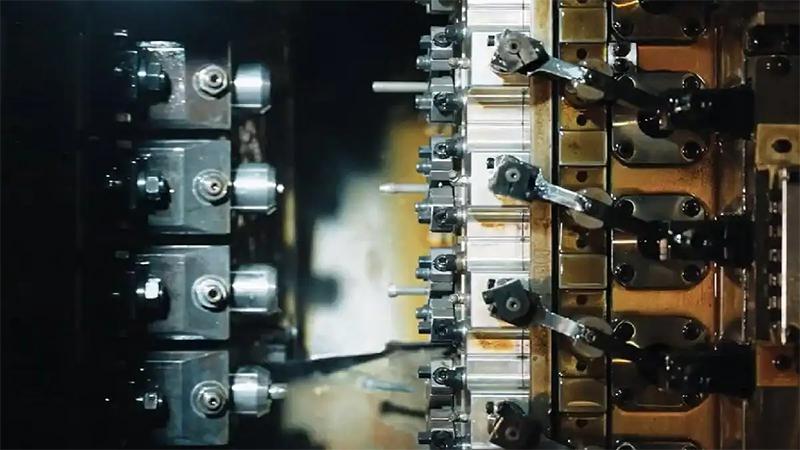
Cold heading is often carried out on specialized cold heading machines, which facilitates continuous, multi station, and automated production. The cold heading machine can sequentially complete processes such as cutting, heading, accumulation, forming, chamfering, wire rolling, diameter reduction, and edge cutting. High production efficiency, reaching over 300 pieces per minute, with a maximum diameter of 48 millimeters for cold heading workpieces.
The schematic diagram of the cold heading bolt process is a typical process for cold heading bolts. The multi station nut automatic cold heading machine is a multi station nut automatic cold heading machine. The bar material is automatically fed into a certain length by the feeding mechanism, cut into blanks by the cutting mechanism, and then sequentially sent to the accumulation and punching stations for forming by the clamp conveying mechanism.
- PREV: No information!
- NEXT: Reasons for corrosion of subway bolts



 网站首页
网站首页 产品中心
产品中心 新闻中心
新闻中心 一键拨打
一键拨打